
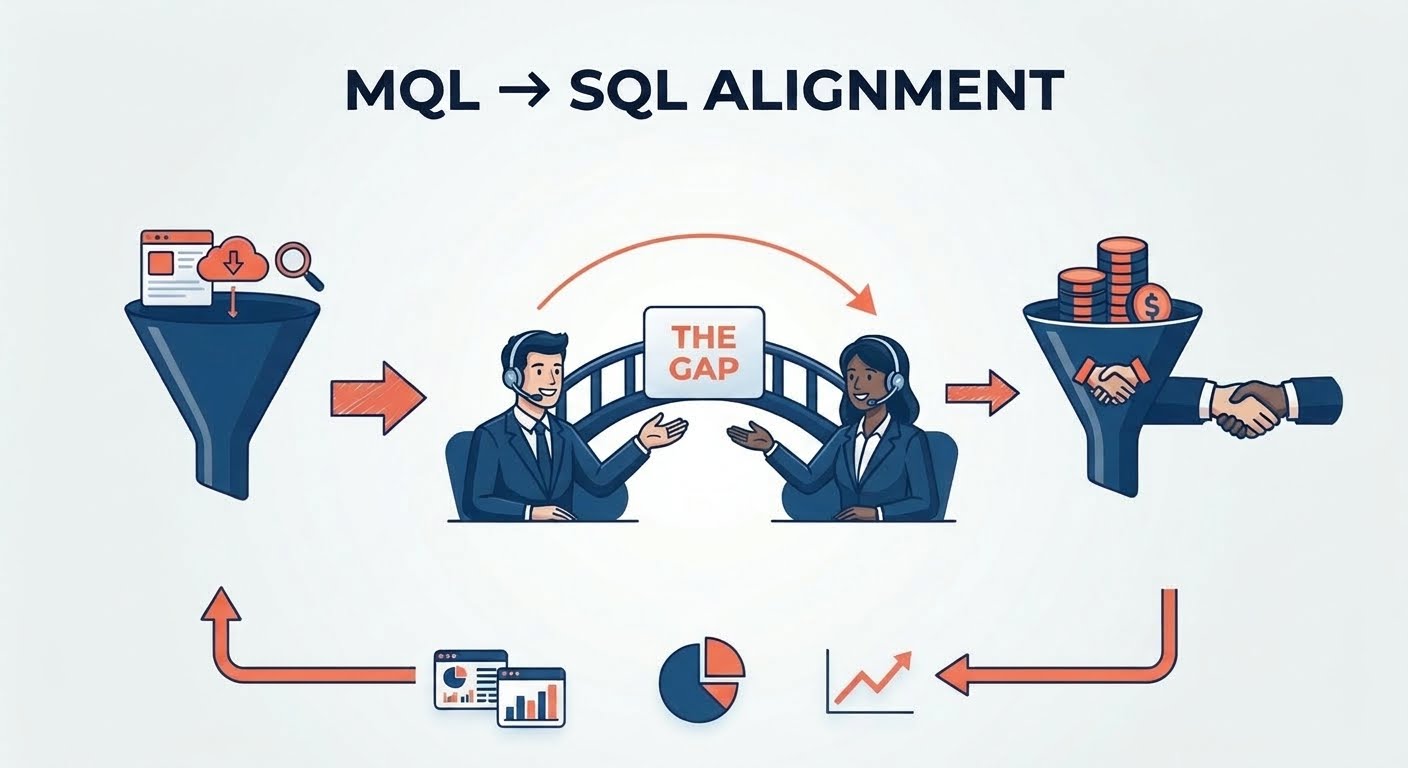
Aligning Sales and Marketing: Why the Gap Between MQL and SQL Needs a Phone Call
Sales and marketing alignment isn’t a shared dashboard. It’s a shared definition of a qualified conversation, and someone accountable for producing it. In most B2B organizations that accountability gap sits between MQL and SQL, and live outbound calling remains the most reliable way to close it.
Why does alignment break down between MQL and SQL?
Marketing optimizes for volume it can attribute; sales optimizes for opportunities it can close. The handoff between them is typically governed by a lead score, and lead scores measure engagement, not intent. A VP who downloads three assets may be researching on a colleague’s behalf. A director with budget and a deadline may never open an email.
When scored leads reach sales without verification, reps cherry-pick, the rest decay, and each side concludes the other isn’t pulling its weight. More automation rarely fixes this. What’s missing is a human conversation before the handoff.
What role should outbound calling play in an aligned funnel?
Calling is the qualification layer that converts engagement signals into verified intent. A short, well-scripted call confirms whether the contact sits on the buying committee, whether there’s an active problem, and what the realistic timeline is. Leads that pass go to sales with context; leads that don’t go back into nurture with a reason attached.
It also recovers value from leads email can’t move. Calling one client’s trade show leads produced a 5% response rate where her email follow-up to the same list produced none. For a medical education client, registration calling generated a 13.5% response rate against a typical 0.5–1%, and 10 new contracts.
How do you make the feedback loop actually work?
Treat call dispositions as marketing data. Standard result codes (qualified, future timing, wrong contact, no fit) show which campaigns produce real pipeline rather than just form fills, which segments have stale contact data, and which objections keep surfacing. Reviewed monthly, that data should drive changes to scoring models, targeting, and messaging.
The loop runs the other way too: build the call guide from current campaign messaging so the conversation picks up where the content left off.
Should qualification calling be in-house or outsourced?
It comes down to volume and consistency. Account executives will always prioritize late-stage deals over qualification calls, and a dedicated SDR team is expensive to build and hard to retain. Outsourced B2B telemarketing lets you scale calling with campaign and event cycles while keeping dispositions flowing back to both teams.
Frequently asked questions
What causes most sales and marketing misalignment?
Mismatched incentives. Marketing is measured on lead volume it can attribute, sales on opportunities it can close, and the handoff between them is usually defined by a scoring threshold rather than a conversation. Leads that cross the threshold but aren’t sales-ready erode sales’ trust in marketing, and the rest decay untouched.
How does phone calling improve lead qualification?
Lead scores measure engagement, not intent. A short qualification call verifies what scoring can only infer: whether the contact is part of the buying committee, whether there is an active problem, and when a decision is likely. That turns an MQL into a lead sales will actually work.
What should a sales and marketing SLA include?
At minimum: a shared definition of a qualified lead, a follow-up time standard by lead source, clear ownership of the qualification step, and standard call dispositions that are reported back to marketing on a regular schedule.
Need a qualification layer between your marketing and sales teams? Call It’s Your Call at 978-772-9600 or book a 30-minute conversation.